Showing posts with label Billy Bishop. Show all posts

Thursday, April 2, 2015

Stepping Back in Time

Edwardian summer life in the legendary lake district of Muskoka - photo by Frank Micklethwaite
For those new to this blog, please look at my 2014 postings for historical tidbits and photos about the Age of Elegance and various aspects of the Great War. We start with  Diamonds in the Wilderness”, one of many posts illustrating the genteel life of lakeside summers for affluent Edwardians, move on to “From Parlour to War”, “The Glamorous Birdmen”, “Sex andthe Soldier”, and others.


Britain's top WW1 Ace, Canadian Billy Bishop


My “Muskoka Novels” The Summer Before the Storm and Elusive Dawn immerse readers in that era.  You can read some of the reviews in this sidebar and see more online at  The Muskoka Novels, where books can also be purchased.

Book 3, Under the Moon, deals with the aftermath - people rebuilding their lives within a drastically changed society. I'm currently working on Book 4, which continues to follow the families through WW2, mostly through the eyes of women.

So I will now be posting occasionally on my new Muskoka Novels blog  - coming soon!


Wednesday, July 16, 2014

Sex and the Soldier


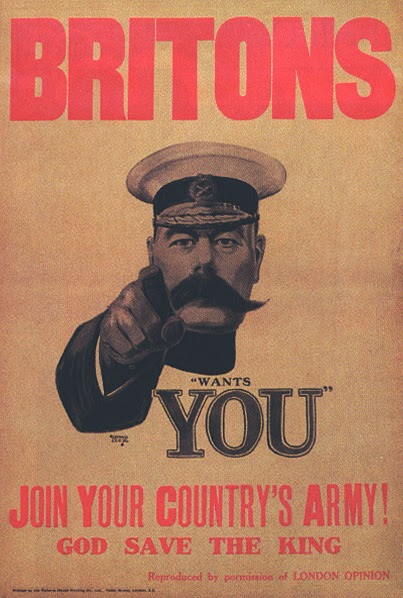
Lord Kitchener recruiting poster

Lord Kitchener wanted men to enlist, but he also advised them, "In this new experience you may find temptations both in wine and women. You must entirely resist both temptations, and, while treating all women with perfect courtesy, you should avoid any intimacy.”

But as Robert Graves wrote in his classic memoir, Goodbye to All That, "There were no restraints in France; these boys had money to spend and knew that they stood a good chance of being killed within a few weeks anyhow. They did not want to die virgins.”

Talbot Papineau
Canada and Britain’s top Ace, Billy Bishop, disclosed his affair with a French girl to his fiancé before their marriage in 1917. In Tapestry of War, Sandra Gywn explores Major Talbot Papineau’s correspondence with a close female friend. “In a manner that for the time was uncommonly frank, he’d confessed much about his sexual transgressions in London.” Papineau was killed at Passchendaele in 1917.

What is surprising is that the military sanctioned visits to licenced brothels, as sex was considered a physical necessity for the men. The "maisons de tolérance" with blue lamps were for officers, and red lamps, for the other ranks. However, no sex education or prophylactics were provided. An astonishing 400,000 cases of venereal disease (VD) were treated during the war, according to the BBC.

The rate of VD among the Canadian troops was almost 6 times higher than that of the British, and was 1 in every 9 men. Not only were the Canadians far from the influence and advantages of home, but their pay was also 5 times that of their British counterparts, so they had ample funds to buy sex and wine.

Troops who ended up in specialized VD hospitals were docked their pay, while officers had to pay 2 shilling and 6 pence for every day they spent in a VD hospital, and also lost their field allowance. Soldiers with VD were not eligible for leave for 12 months. But contracting VD was also a way to escape the horrors of the trenches, at least for a while.

My first two Muskoka Novels, The Summer Before the Storm and Elusive Dawn, explore the theme of wartime morality.


Wednesday, July 2, 2014

The Art of War


My characters enjoy spending time with real people, so it’s understandable that ambitious Jack Wyndham is thrilled to meet powerful ex-pat Canadian millionaire, British MP, and newspaper baron, Sir Max Aitken, who becomes Lord Beaverbrook in 1916. A self-made man, Aitken admires Jack’s cleverness and business savvy, but also recognizes his artistic talents, and hires him to be one his war artists.

"A Copse, Evening" by A.Y. Jackson. Beaverbrook Collection of War Art, Canadian War Museum
Farsighted and always a staunch Canadian, Aitken established and financed the Canadian War Records Office in 1916 in order to document Canada’s war efforts in film and photographs, despite initial opposition from the War Office. Troops and other personnel, like nurses, were not allowed to have cameras overseas, so these official photographers produced vital historical records.

"War in the Air" by C.R.W. Nevinson, Beaverbrook Collection of War Art, Canadian War Museum
Beaverbrook also established the Canadian War Memorials Fund, hiring artists to capture Canadians on the home front – in the fields and factories – as well as in the trenches. Nearly 1000 paintings were created by artists such as A.Y. Jackson, Frederick Varley, and Arthur Lismer, who would later become members of the Group of Seven. The “War in the Air” painting above depicts Canada’s and Britain’s top Ace, Billy Bishop, in combat.

After decades of lying sadly neglected and unseen in the vaults of the National Art Gallery, these treasures are now housed at the Canadian War Museum, where some are on permanent display.

In Elusive Dawn you can join Jack Wyndham for a country house weekend at Max Aitken’s estate, Cherkely Court.


Wednesday, June 18, 2014

Hell's Bells, Slang is Fun!


One of the challenges of writing historical fiction is not only understanding the mindset of people from a different era, but also having them speak the lingo of their time. Many slang words and colloquialisms survive decades, but others are fleeting, and colourfully help to define the age.

Something good is surely more fun when it’s “crackerjack”. If you “talked wet” in 1914, someone might have responded with “Applesauce!” or “Flapdoodle!”, as my characters do to what they consider nonsense.

A fly boy and his bus
In WW1 military slang, a “fly boy” often got the “wind up” when he flew missions over the front lines in his “bus”, because the “Huns’” “archie” would be out to get him. Pilots had to contend with these “ack-ack” guns from the ground as well as machine-gun fire from enemy aircraft, including the Red Baron’s “flying circus”. Being a bit “windy” or scared might actually have helped a pilot make better choices to survive.

Traumatized by the horrors of trench warfare, many men hoped for a “Blighty” that would get them shipped back to England without being too badly wounded. But those who “copped a packet” often ended up “going west”, sometimes into an unmarked grave. The men in the trenches feared the usual morning and evening “hate” when they were bombarded by “blind or flying pigs”, “moaning minnies”, “whizz-bangs”, or other artillery. For soldiers, “chatting” meant de-lousing, while “swinging the lead” could land them in serious trouble with “brass hats” for shirking their duty.

“Tommies” and American “Doughboys” appreciated a good bottle of French “plonk”, but too much could result in becoming “squiffy”, “pie-eyed”, or “spifflicated”.

Words are such fun, aren’t they? I use several sources in my research, but the Oxford Dictionary of Slang is “the cat’s pajamas”!